Articles
Posted on March 18, 2026
The Bank of Canada held rates steady on March 18 As Expected
Bank of Canada Holds Policy Rate Steady
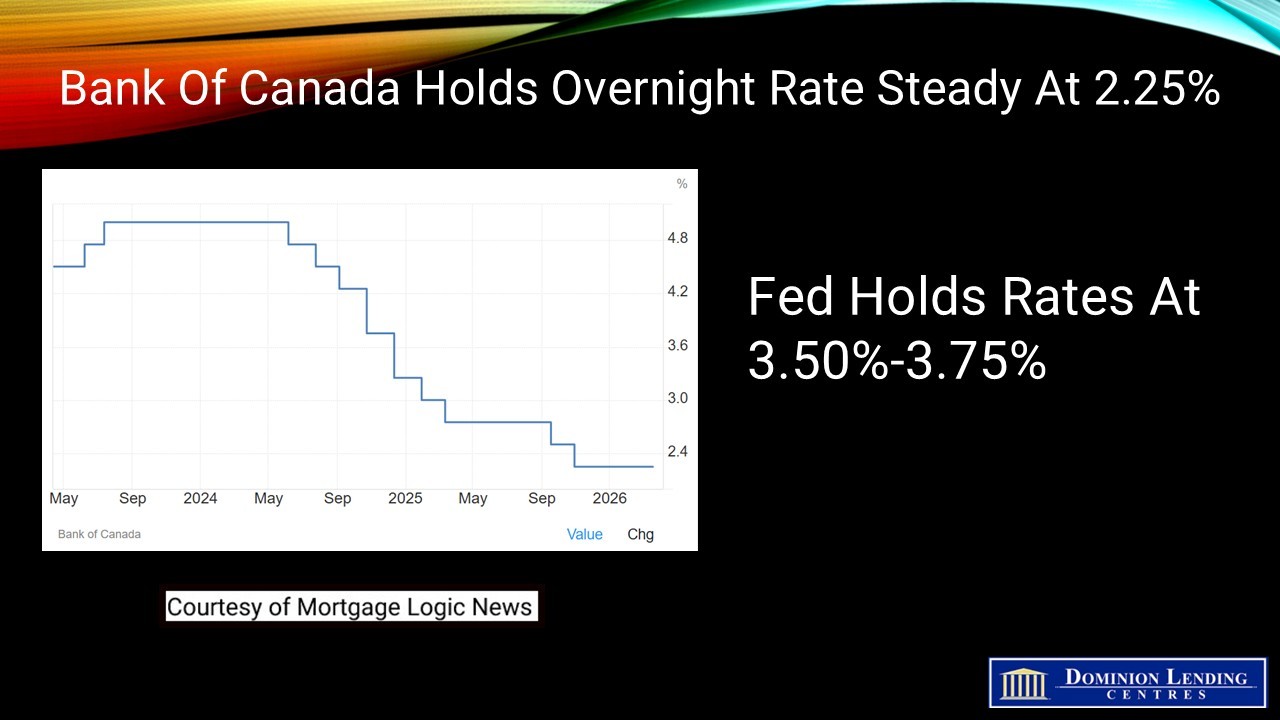
Today, the Bank of Canada once again held the policy rate steady at 2.25%. This is the bottom of the Bank’s estimate of the neutral overnight rate, where monetary policy is neither expansionary nor contractionary. With inflation hovering just under 2% and core inflation falling to 2.3%, the Governing Council sees the current overnight rate as appropriate, as the Bank looks through the inflationary effects of the war in Iran.
Economic activity has slowed amid the 19-day-old war, with widespread supply disruptions. “Since the outbreak of the conflict in the Middle East, global oil and natural gas prices have risen sharply, and this will boost global inflation in the near-term. In addition to energy supply disruptions, transportation bottlenecks stemming from the effective closure of the Strait of Hormuz could impact the supply of other commodities, such as fertilizer. Financial conditions have tightened from accommodative levels. Global bond yields have risen, equity market prices have declined, and credit spreads have widened. The Canada-US dollar exchange rate has remained relatively stable.”
The labour market in both Canada and the U.S. remains soft. ” Employment gains in the fourth quarter of 2025 were largely reversed in the first two months of 2026, and the unemployment rate rose to 6.7% in February. Looking through the volatility, recent data also suggest ongoing weakness in exports. It’s too early to assess the impact of the conflict in the Middle East on growth in Canada.”
Bottom Line
The Bank of Canada has shown its willingness to bolster the Canadian economy amid unprecedented trade uncertainty. At the same time, Canada is working hard to establish alternative trading partners. Even the vast Chinese market cannot replace the US in terms of proximity and cost-effectiveness, given the high transport costs. China has stepped up its purchases of Canadian oil to record levels. There is no single market the size of the US market to replace exports of steel and aluminum, but the prospects of rising exports to Europe and Asia will help to offset the impact of US tariffs.
The War in Iran, now in its third week, has caused a monumental oil price shock as the Strait of Hormuz is virtually shut down. Other commodity prices have also risen sharply, including natural gas, aluminum, and fertilizer prices. Consumers and businesses are tightening their belts amid uncertainty about the war’s duration.
Housing market activity has been in a long, slow downward trend. Nominal home prices have fallen 20% from their peak in the second quarter of 2022. When accounting for inflation, real home prices are down 30%, providing an enormous opportunity for first-time homebuyers.
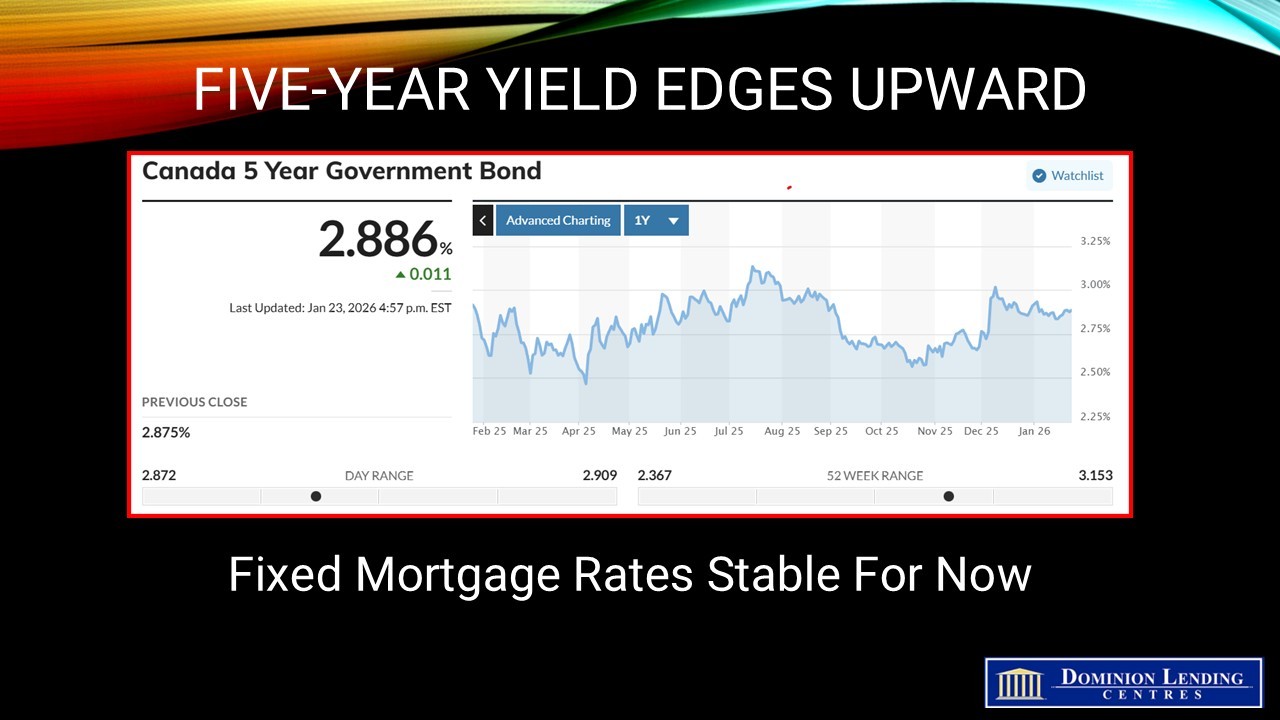
In this environment, market-driven interest rates have risen. The 5-year bond yield is once again attempting to break through 3%. The 2-year bond at 2.72% is well above the 2.25% overnight rate, and the Canadian dollar is rising. Lenders have recently increased fixed mortgage rates, which will be more popular if people generally expect rates to rise.
The key to the outlook is the continuation of CUSMA. We will likely suffer several more months of uncertainty before we know the fate of the trade agreement. In the meantime, PM Carney will continue to encourage trade deals in non-US countries.