Articles
Posted on March 17, 2026
Housing Activity Remained Weak in February Reflecting a Weather-Related Slowdown
Housing Activity Fell Again in Early February–Depressed by Record Winter Storm–Before Picking Up in Late February
Today’s release of February housing data by the Canadian Real Estate Association (CREA) showed the housing market slowed further at the start of the month, reflecting the lingering effect of January’s snowstorm. Activity picked up in the second half of the month, a positive harbinger of a spring rebound.
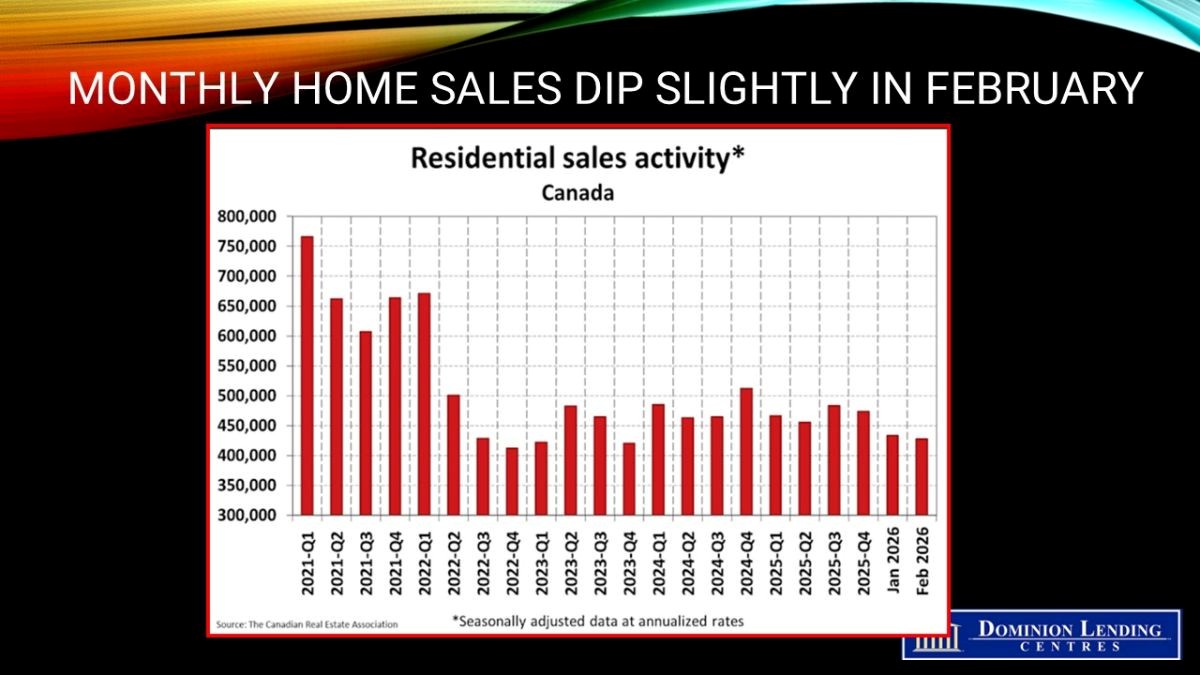
The number of home sales recorded over Canadian MLS® Systems fell 1.3% on a month-over-month basis in February 2026, following a 5.8% decline in January.
“February saw a continuation of the quieter levels of activity recorded in January, although there was some indication things were starting to pick up speed toward the end of the month,” said Shaun Cathcart, CREA’s Senior Economist. “2026 is still ultimately expected to be a story about pent-up first-time buyer demand finally seeing a chance to enter the market. They’ve had to wait a long time for mortgage rates to find a bottom, but some will no doubt continue to hold off for a bottom in prices in some Ontario and British Columbia markets.”
New Listings
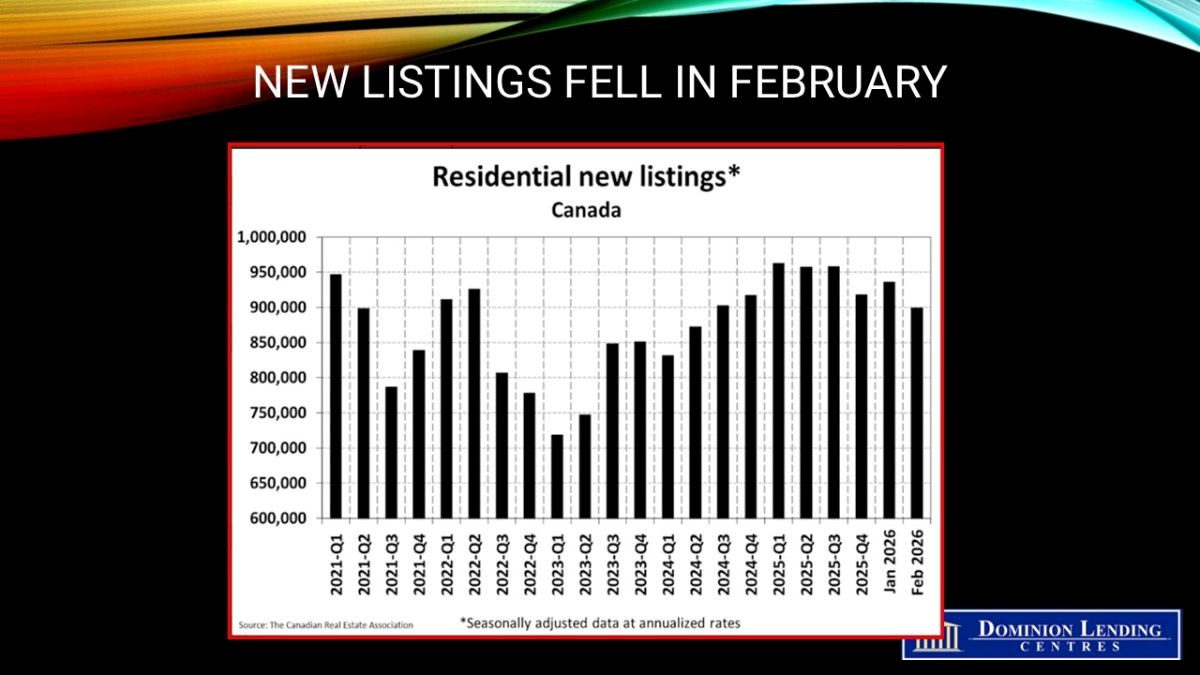
New listings fell back by 3.9% on a month-over-month basis in February 2026, erasing the jump recorded in January.
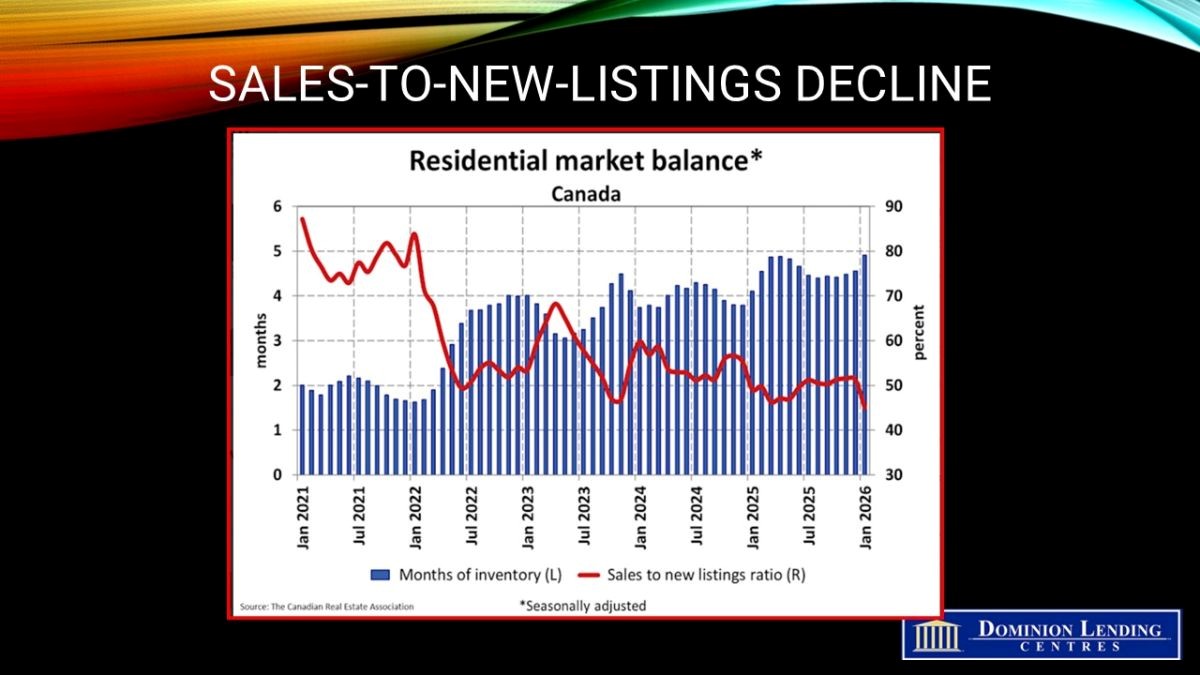
With new supply down by more than sales in February, the national sales-to-new listings ratio tightened to 47.6% compared to 46.4% in January. The long-term average for the national sales-to-new listings ratio is 54.8%, with readings roughly between 45% and 65% generally consistent with balanced housing market conditions.
“Housing market activity in February remained slow, particularly in the stretch of Ontario between Windsor and Toronto,” said Valérie Paquin, CREA Chair. “That said, the main event never really gets going until around April, so there’s still time to get ready to buy or sell this year.”
There were 151,850 properties listed for sale across all Canadian MLS® Systems at the end of February 2026, up 3.7% from a year earlier but 12.3% below the long-term average for that time of year.
There were five months of inventory on a national basis at the end of February 2026, unchanged from January and right in line with the long-term average for the measure. However, the national average masks wide regional differences, with no province currently at that level and only a handful of local markets close to it. Based on one standard deviation above and below that long-term average, a seller’s market would be below 3.6 months, and a buyer’s market would be above 6.4 months.
Home Prices
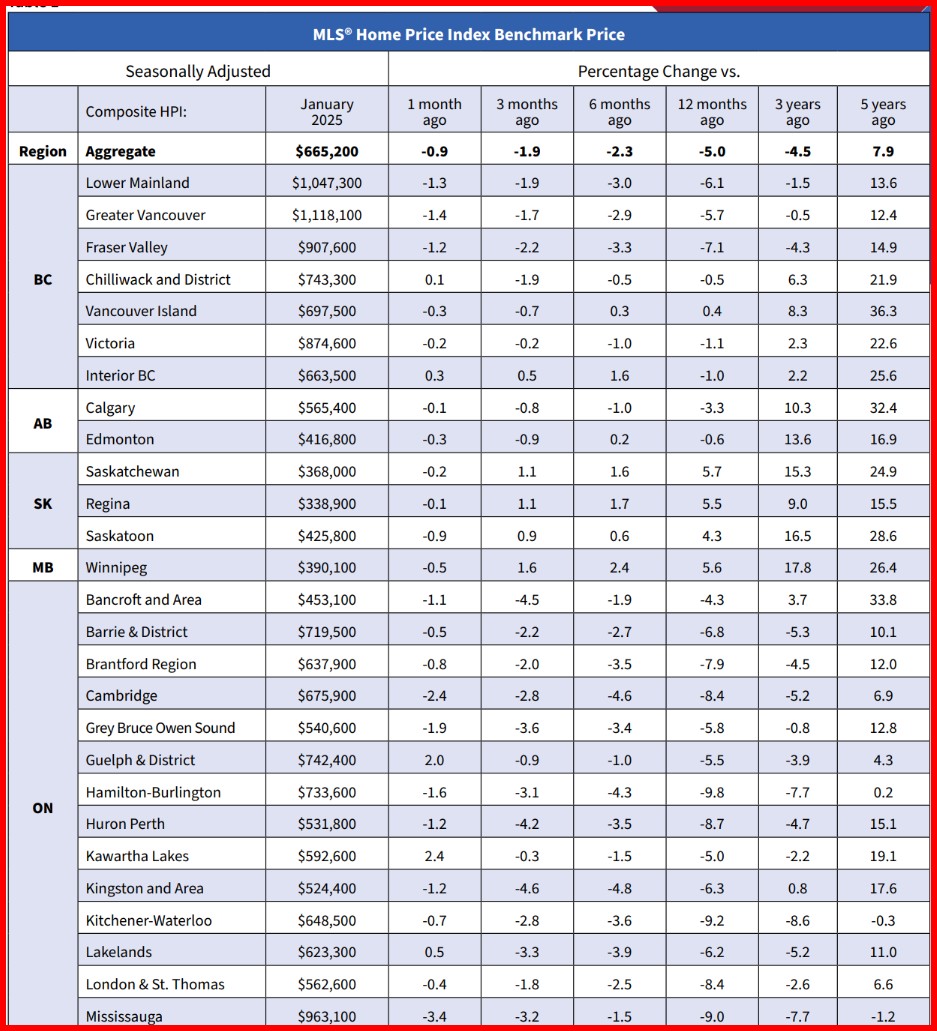
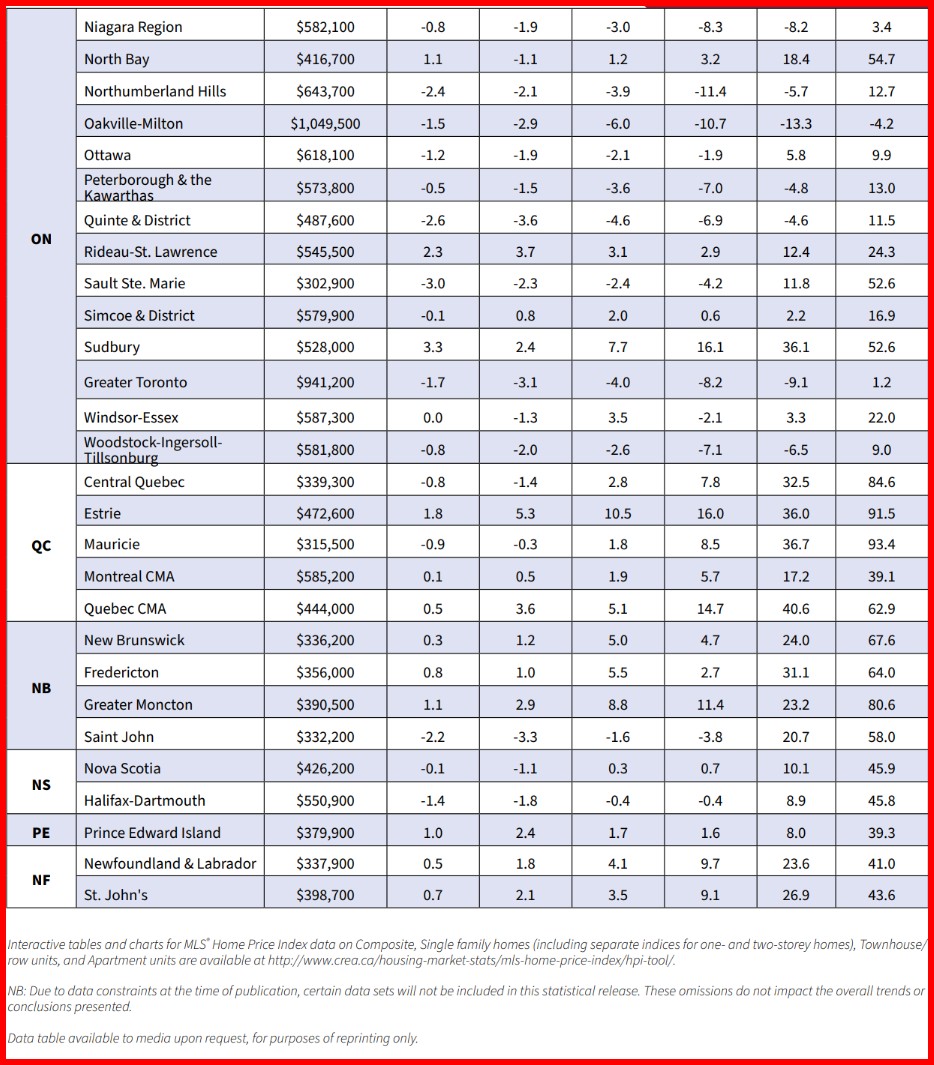
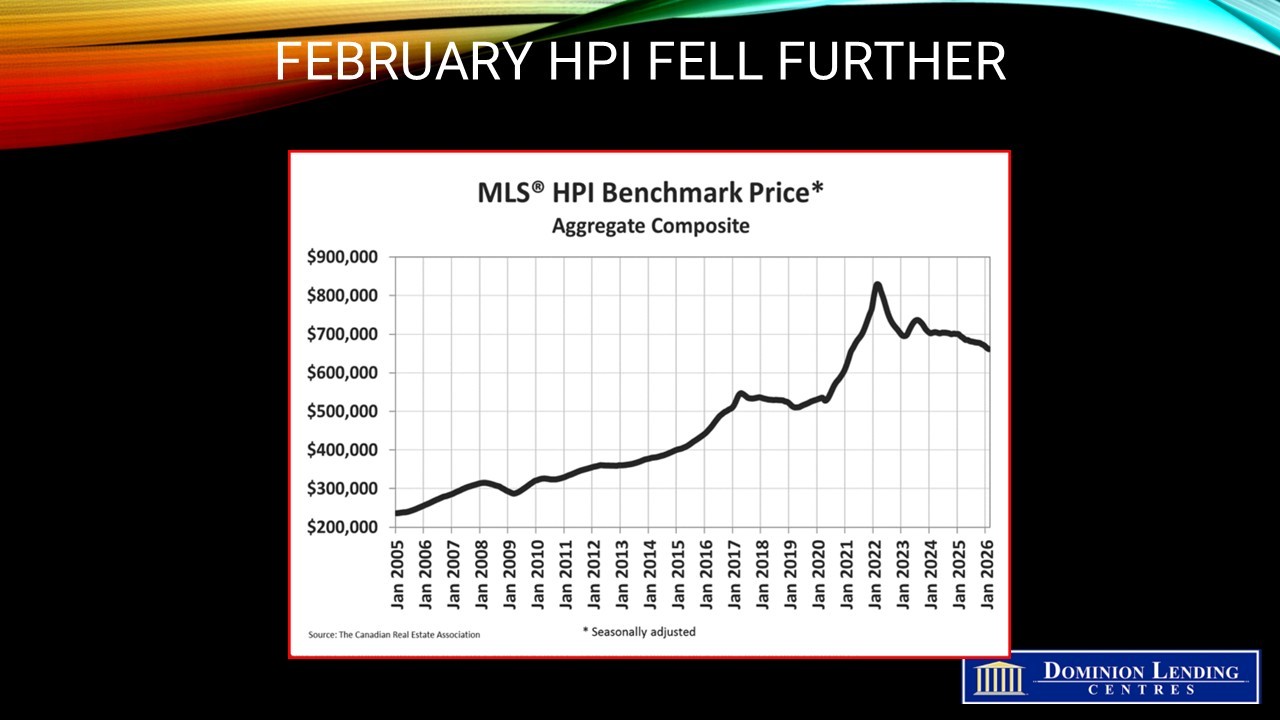
The National Composite MLS® Home Price Index (HPI) edged down 0.6% on a month-over-month basis in February, not a small decline but smaller than in January.
The non-seasonally adjusted National Composite MLS® HPI was down 4.8% compared to February 2025.
Bottom Line
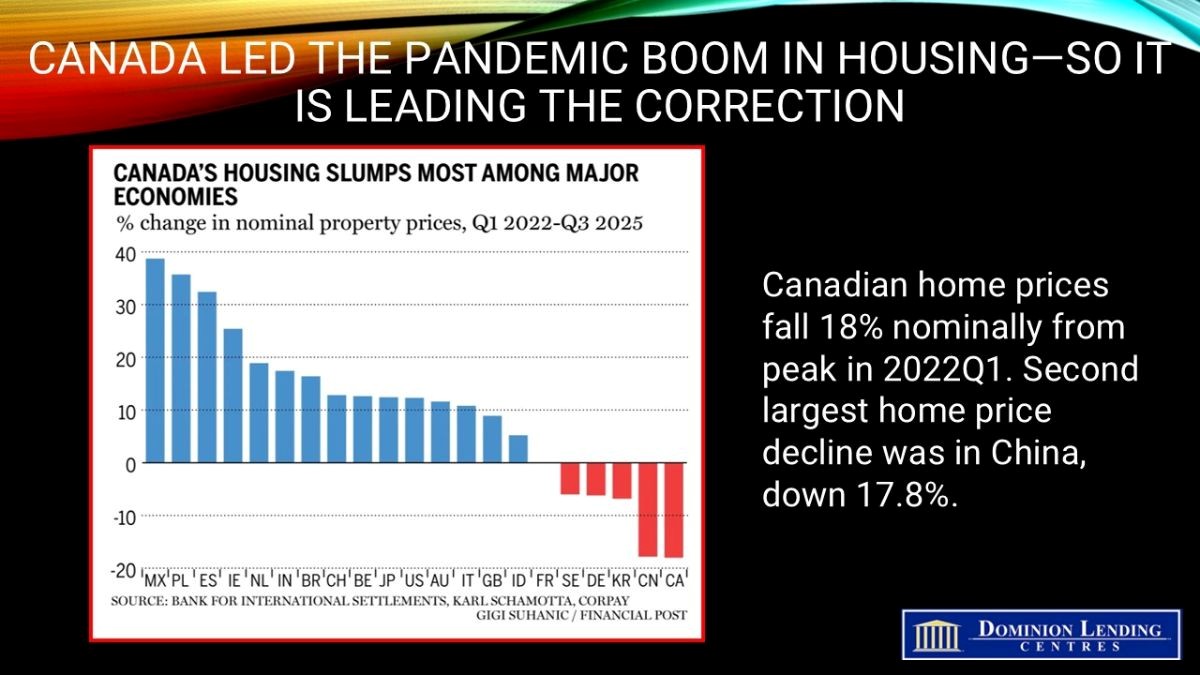
The chart below shows that, just as Canada had a record housing rally during the pandemic, it is leading the housing correction. Canadian home prices are down 18% from their peak in the first quarter of 2022, when the Bank of Canada took the overnight rate down to a mere 25 bps. Currently, the policy rate is 2.25%, down from 5.0% at the peak of the tightening cycle. Back then, ultralow interest rates drove home prices to surge, particularly in smaller cities where remote workers fled to take advantage of a lower cost of living.
There is considerable pent-up demand among potential first-time buyers who will likely dip their toes in the market once winter passes. This year, we also see a record volume of refis and renewals, which will increase monthly mortgage payments and dampen household purchasing power. Affordability remains a challenge for first-time buyers, but mortgage rates and prices are considerably lower than a year ago. A reawakening of housing activity is likely as the spring market approaches, even with the war in Iran.
To be sure, the recent oil price shock has boosted market-driven interest rates as inflation fear mounts. Yesterday’s release of the CPI data shows that Canada’s inflation rate fell sharply before the war began. How much further inflation might rise will depend on the length of the war and the subsequent time it will take to reopen the Strait of Hormuz.