Articles
Posted on April 20, 2026
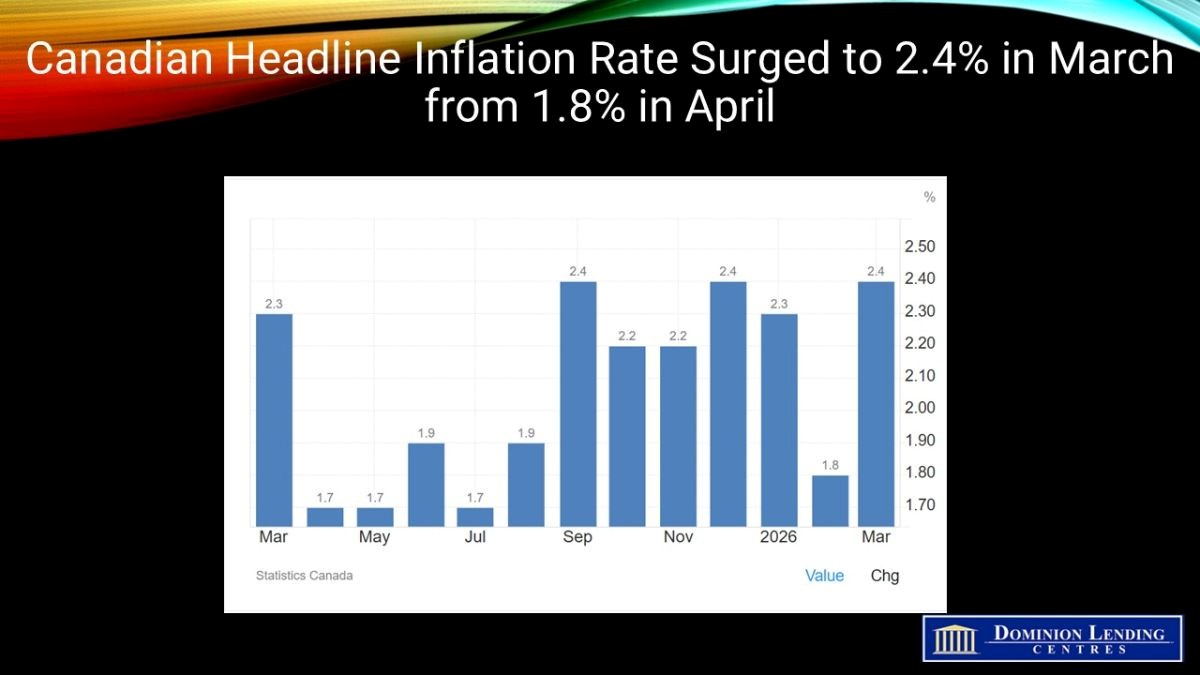
Canadian Inflation Jumps to 2.4% Y/Y As War Causes Oil Price Shock.
Canadian Inflation Surges to 2.4% Y/Y on Oil Price Shock
The headline inflation rate in Canada surged as expected with the War in Iran and the resulting oil price shock. The inflation rate hit 2.4%, up from 1.8% in February, tying for the highest in a year but a bit below market expectations of 2.5%. The surge reflected the initial impact of the war in the Middle East on Canadian consumer prices, as disruptions to tankers from the Persian Gulf triggered energy shortages worldwide. The consumer energy inflation swung to 3.9% from the deflation rate of 9.3% in the previous month, enough to raise transportation inflation to 3.7% (vs -0.8% in February). In turn, prices accelerated for shelter (1.7% vs 1.5%) and recreation and education (2.6% vs 0.5%). Meanwhile, base effects from the reintroduction of GST/HST taxes continued to impact food inflation, which fell to 4% from the 5.4% in February. The CPI rose 0.9% from the previous month, driven by a 21.2% surge in gasoline prices. Excluding gasoline, the CPI rose at a slower year-over-year pace in March (+2.2%) than in February (+2.4%). The CPI was up 0.9% month-over-month in March. On a seasonally adjusted monthly basis, the CPI increased 0.5%.
Higher energy prices drive up inflation
Energy prices rose 3.9% on a year-over-year basis in March, after decreasing 9.3% in February. On a monthly basis, energy prices rose 13.1% in March.
Higher gasoline prices were the primary driver of the year-over-year acceleration in the CPI, as consumers paid 5.9% more for gasoline in March than in the same month the previous year. Prices rose 21.2% in a month, the largest monthly gasoline price increase on record, driven by a supply shock from the conflict in the Middle East. However, this monthly effect was muted year over year due to the comparison with prices from March 2025, which included the since-removed consumer carbon levy. The removal of the consumer carbon levy will no longer impact the 12-month movement as of April 2026, and this will be reflected in next month’s CPI release.
Moderating the acceleration in energy prices were lower prices for natural gas (-18.1%), which are largely dependent on North American supply and therefore more insulated from global price changes.
Prices for food purchased from stores rose 4.4% on a yearly basis in March, after increasing 4.1% in February.
On a year-over-year basis, prices for fresh vegetables increased 7.8% in March, the largest increase since August 2023 (+8.7%), after rising 0.5% in February. Cucumbers, peppers and celery all had notable price growth in March, due in part to tighter supplies related to adverse growing conditions in producing countries.
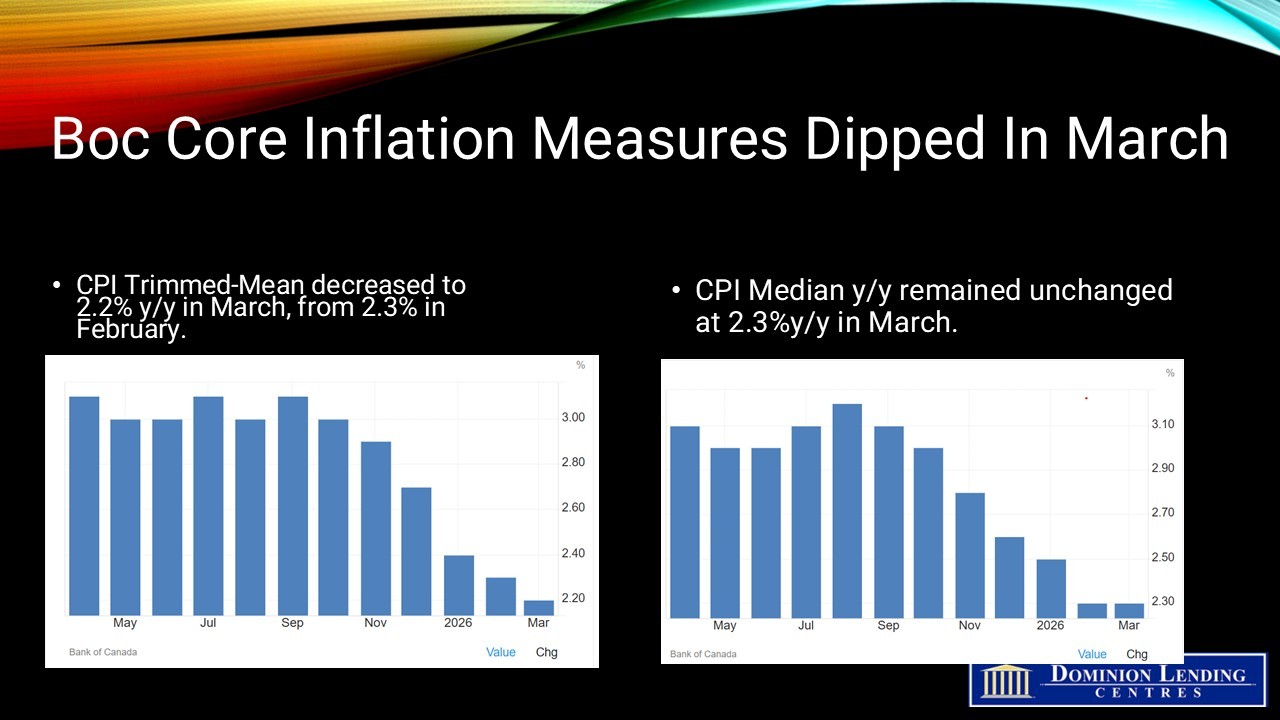
Core inflation measures also came in below expectations, with core inflation hitting 2.0% and the CPI trimmed-mean 2.2% from a year ago, the slowest pace in five years, amid weak housing resales and smaller rent price increases.
Bottom Line
It is very good news that the inflation backdrop softened last month, before the onslaught of the Iran war and the oil price shock. Some of the weaker base effects will be evident in the March CPI data as well, mitigating the impact of soaring energy and commodity prices on this month’s headline inflation number.
The Bank of Canada and the U.S. Federal Reserve will remain on the sidelines at the next statement date on April 29, as a relatively quick end to the Iran war would keep a lid on inflation. President Trump has asked NATO countries to send warships to the Middle East to help open the Strait of Hormuz. The sooner the war ends, the sooner the oil price shock will dissipate. Given the uncertainty, the central banks will do best to keep their powder dry this time around, particularly given that labour markets in both countries have weakened substantially.