Articles
Posted on August 17, 2026
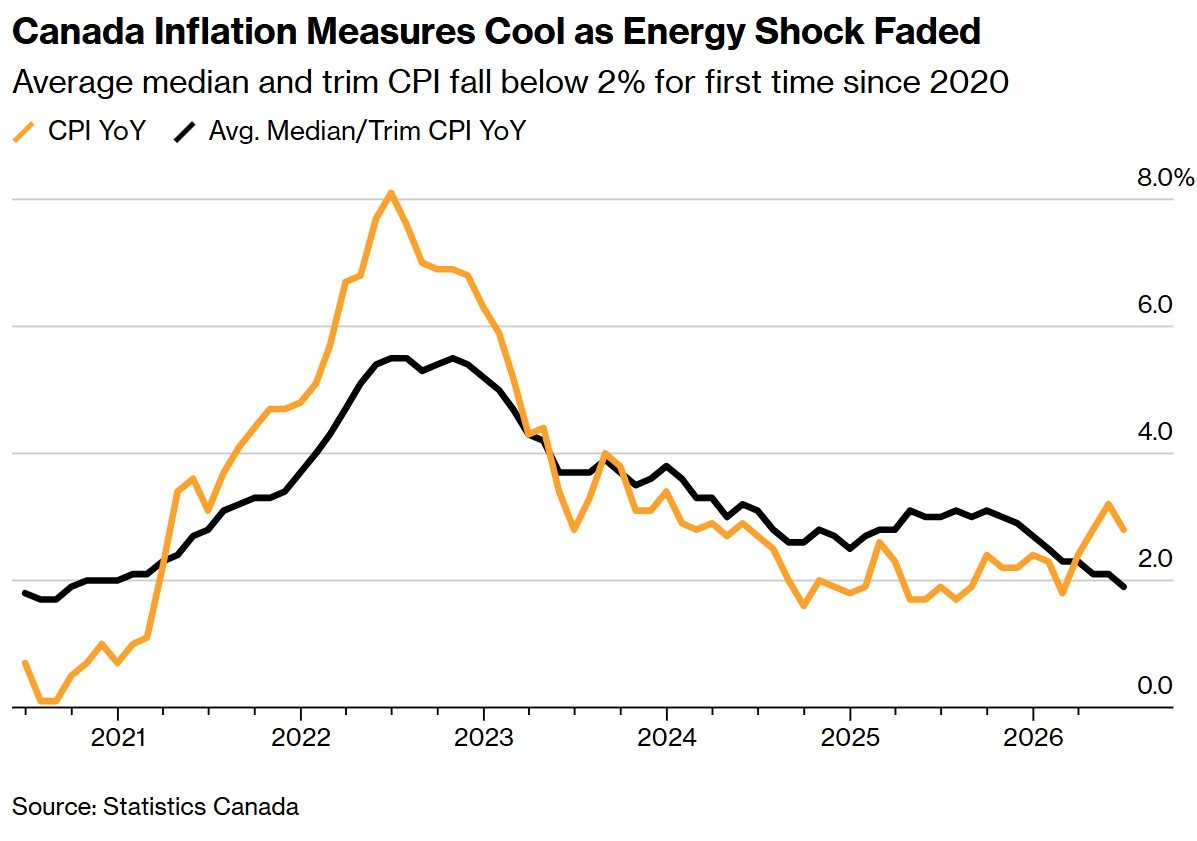
Canadian headline CPI inflation rose to 3.0% y/y as Iran conflict pushed up gasoline prices.
Canadian CPI Inflation Edges Up to 3.0% in July, While Core Inflation Remains Below Its 2% Target
The Consumer Price Index (CPI) rose 3.0% y/y in July, following the June gain of 2.8%. The inflation uptick was caused by higher gasoline prices and a rise in the cost of travel tours. Slowing the faster price growth was the deceleration in grocery prices. The all-items CPI excluding gasoline rose 2.2% for the third consecutive month.
Year over year, gasoline prices grew faster in July (+25.7%) than in June (+20.5%). The conflict in the Middle East, including the blockade of the Strait of Hormuz and the partial closure of Red Sea shipping routes in late July, put upward pressure on gasoline prices.
Year over year, prices for travel tours rose faster in July (+15.2%) than in June (+6.8%). Higher prices were driven by more expensive hotels and flights, coinciding with World Cup matches.
Similarly, air transportation prices rose 12.0% year over year in July, following a 9.6% increase in June. Contributing to the price increase were higher jet fuel costs.
The average of the Bank of Canada’s preferred core measures of inflation rose by 1.95%, barely rising from the previous month and remaining below its 2% target.
Prices for food purchased from stores grew more slowly in July (+3.1%) than in June (+3.9%) on a year-over-year basis. Despite the slowdown, July was the 18th consecutive month that grocery price inflation outpaced the all-items CPI.
The year-over-year deceleration in grocery prices was driven by slower price growth for fresh vegetables (+3.9%) and fresh or frozen chicken (+0.3%) as well as lower prices for cereal products (-1.7%). Higher prices for fresh fruit in July (+6.1%) compared with June (+1.7%) moderated the slowdown.
On a monthly basis, price growth for fresh fruit recorded the highest month-over-month movement for the month of July since 2011, at 4.7%. Driving the monthly increase were higher prices for berries and melons.
Year over year, prices rose faster in all provinces in July than in June, except for Ontario.
Year over year, Ontario was unchanged at 2.0% in July compared with June (+2.0%). This was the smallest price increase among the provinces, driven by declines in homeowners’ replacement cost (-4.6%) and natural gas prices (-18.7%).
Nova Scotia had the highest rate of inflation among the provinces at 5.0% in July. Higher prices for electricity (+3.3%) and rent (+8.7%) drove the acceleration.
In New Brunswick, faster price growth was led by higher prices for electricity (+4.4%) and traveller accommodation.
Bottom Line
Today’s inflation report reinforces our view that higher gasoline prices temporarily boost headline inflation while further eroding household purchasing power. However, these energy-driven increases, largely tied to geopolitical tensions, are unlikely to trigger a broader resurgence in underlying inflation. While food and shelter continue to account for a disproportionate share of price growth, inflationary pressures across the economy are generally moderating amid slowing domestic demand.
The duration of the disruption in the Strait of Hormuz remains a key risk. The longer the shipping route remains closed, the longer energy prices are likely to remain elevated. Even so, the June data support our base-case scenario that the Bank of Canada will remain on hold through the remainder of 2026. Policymakers will continue to closely monitor incoming inflation data and stand ready to tighten policy if price pressures broaden and become more persistent. Still, for now, underlying inflation trends remain consistent with a patient, wait-and-see approach.