Articles
Posted on November 17, 2026
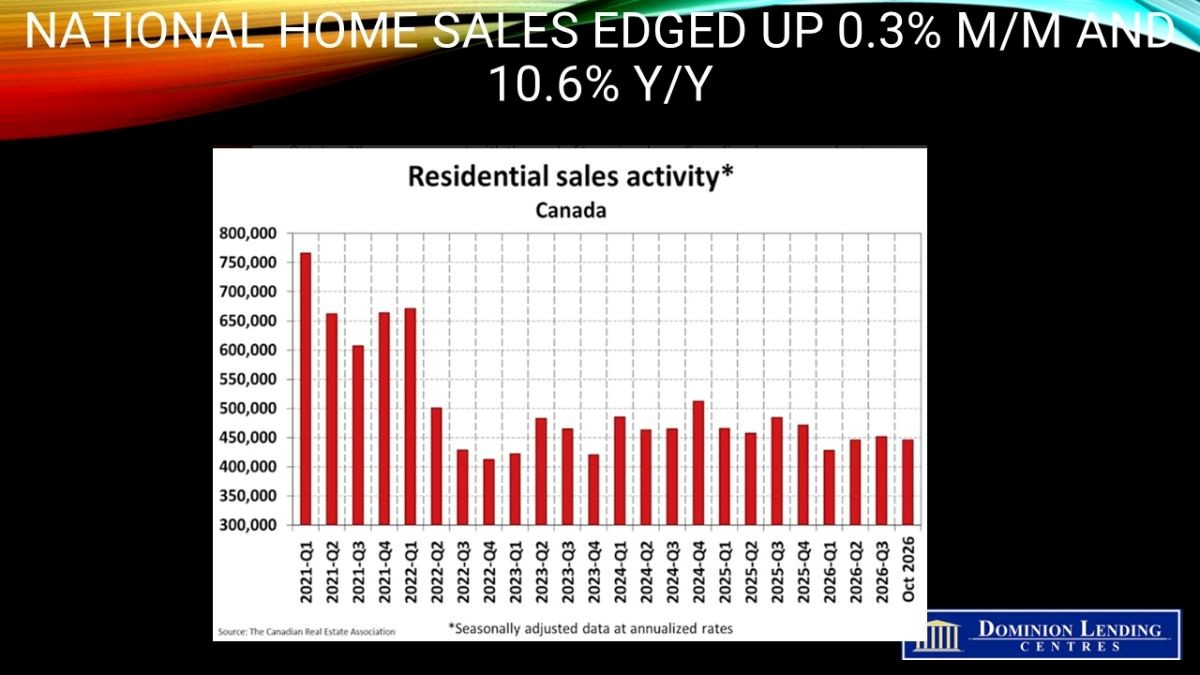
National home sales edged upward 0.3% m/m, but was 10.6% below year-ago levels. New listings and home prices increased moderately.
Canadian Home Sales and Prices Rise Modestly Despite Higher Mortgage Rates
The number of home sales recorded through the Canadian MLS® Systems edged up 0.3% month over month in October 2026.Actual (not seasonally adjusted) monthly activity came in 10.6% below October 2025.
“In a widely expected move, the Bank of Canada raised its policy interest rate at its October 28 announcement with the goal of tamping down Canadians’ concerns about creeping inflation stemming from higher energy costs,” said Shaun Cathcart, CREA’s Senior Economist. “That said, with the Bank’s preferred inflation measures still very well behaved, this is unlikely to be a repeat of the 2022 tightening cycle. Rather, it is more likely to be of the mild to moderate variety, although that distinction does carry extra weight in times of stretched affordability.”
New Listings
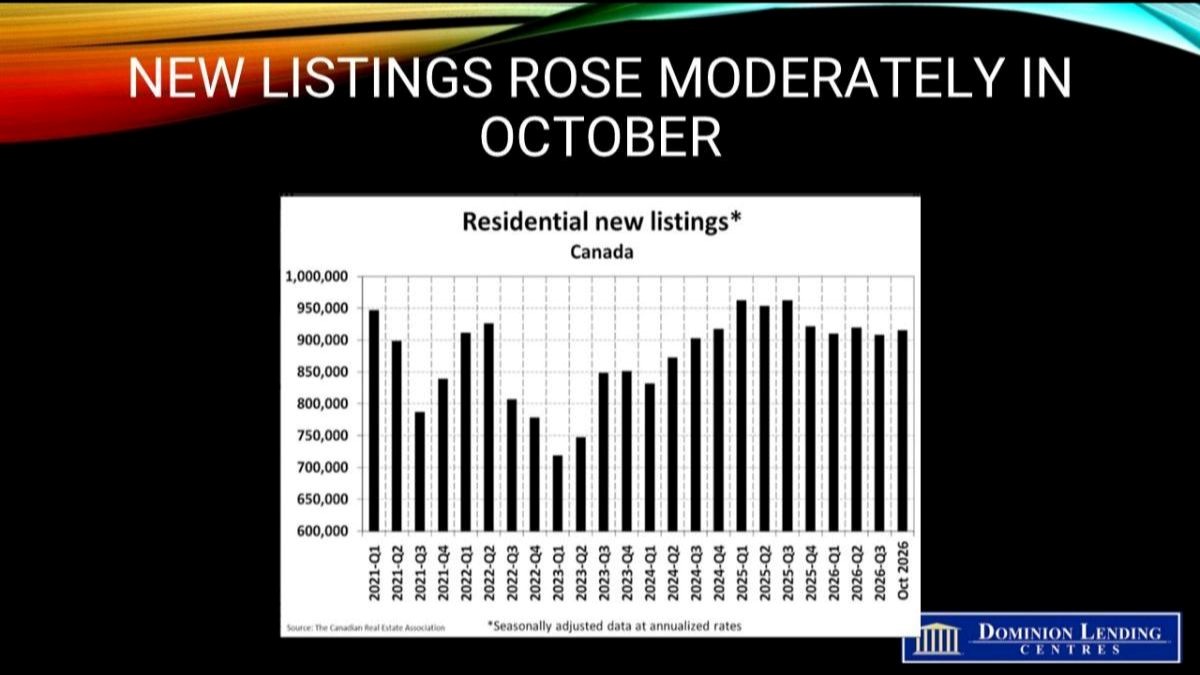
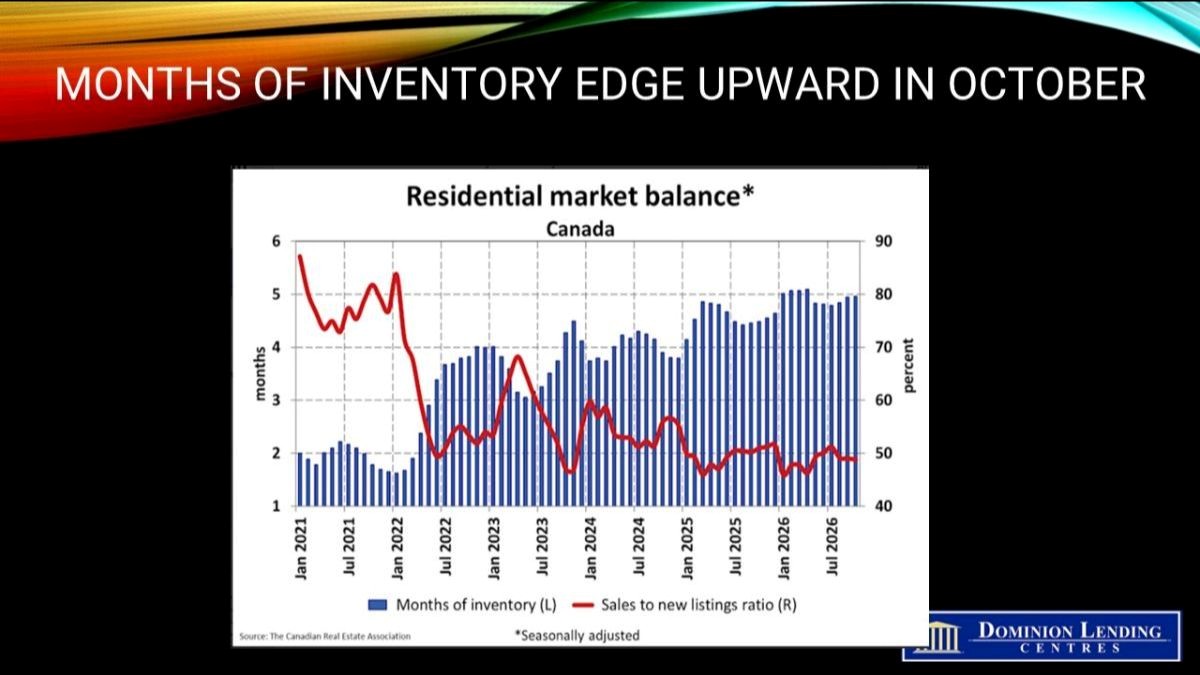
New listings increased by 0.8% in October compared to September. With the small increase in new supply slightly larger than the even smaller gain in sales activity in October, the national sales-to-new listings ratio eased modestly to 48.7% compared to 49% in September. The long-term average for the national sales-to-new listings ratio is 54.7%, with readings roughly between 45% and 65% generally consistent with balanced housing market conditions.
“Despite most forecasters sharpening their pencils and lowering their predictions, so far we’ve only seen a slight slowdown in housing activity from the summer to the fall, probably less than many would have predicted in an environment of rising interest rates,” said Garry Bhaura, CREA Chair. “With the market moving into its traditionally quieter months, now is a great time to shift into planning mode for 2027.”
There were approximately 197,000 properties listed for sale on all Canadian MLS® Systems at the end of October 2026, up slightly from the long-term average of 190,000. For historical perspective, inventory levels at this time of year have been as high as 250,000 listings a little over a decade ago and as low as 100,000 in the fall of 2021, at the height of the COVID-19 housing boom.
There were five months of inventory nationally at the end of October 2026, up slightly from this summer but right in line with the long-term average for the measure. Based on one standard deviation above and below that long-term average, a seller’s market would be below 3.6 months, and a buyer’s market would be above 6.4 months.
Home Prices
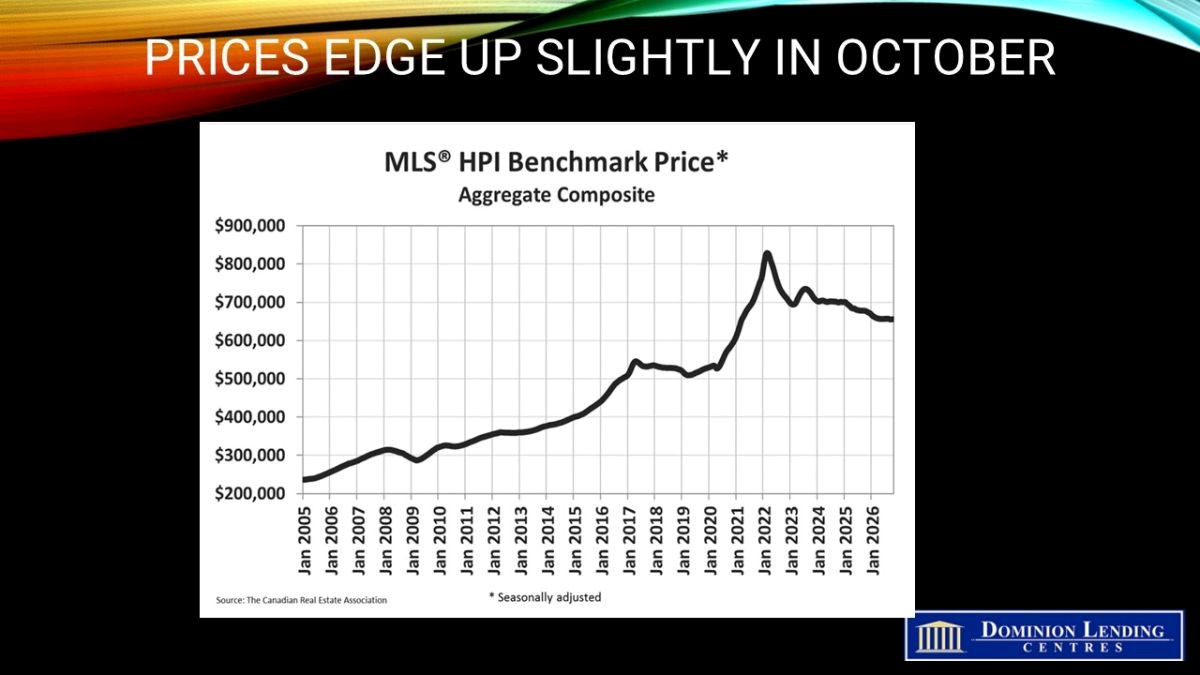
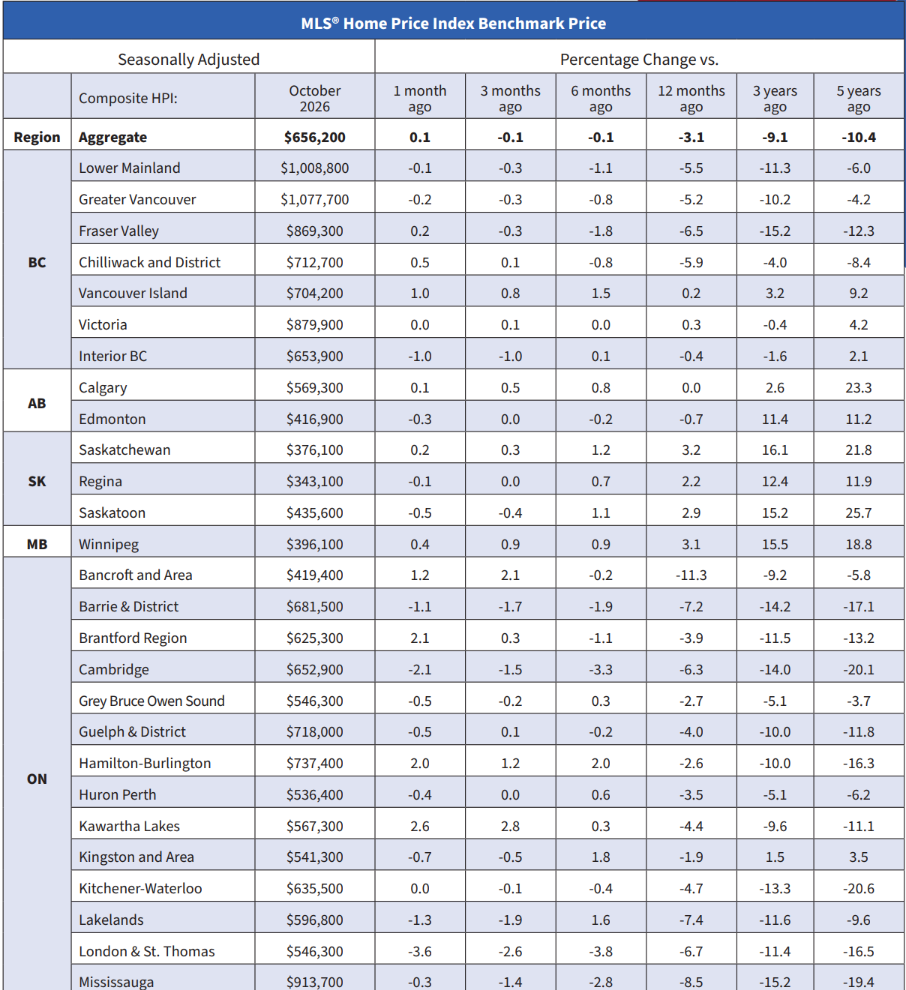
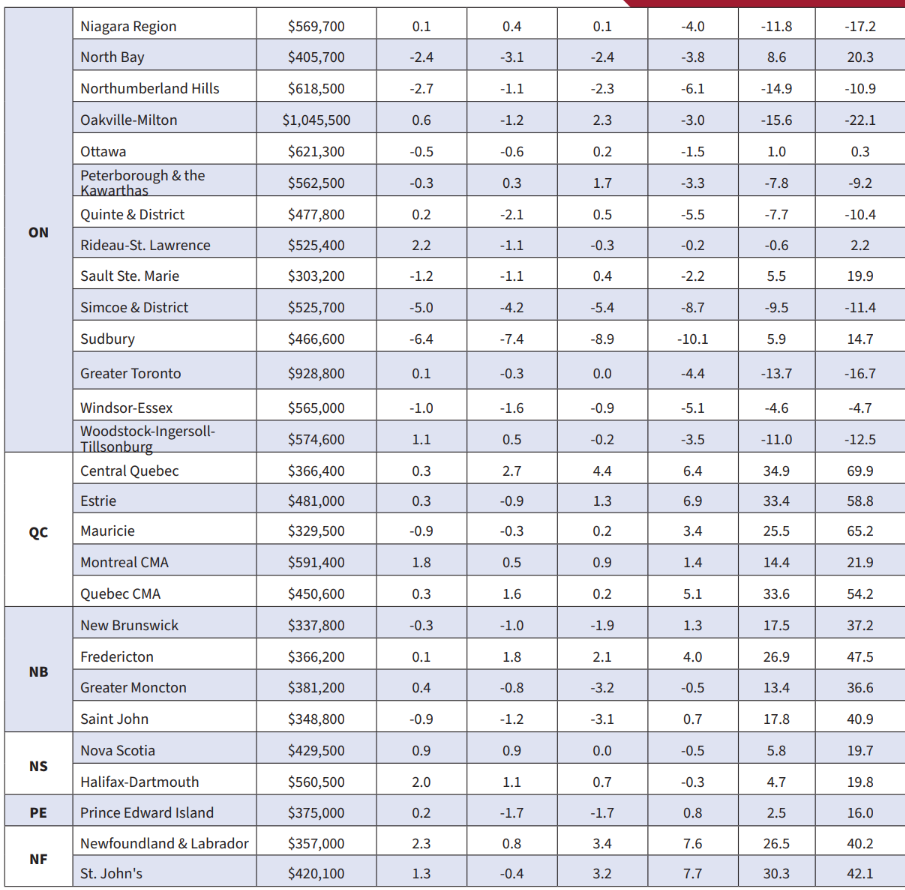
The National Composite MLS® Home Price Index (HPI) edged up 0.1% from September to October, which could either be described as mostly unchanged or the biggest increase in two years.
The non-seasonally adjusted National Composite MLS® HPI was down 3.1% compared to October 2025, a smaller decline than in September and smaller than most other readings in 2026.
Bottom Line
Canada’s housing market has continued to slow in 2026 as the trade war with the US drags on. Energy-related inflation also added pressure to the economy, causing the BoC to raise the overnight rate 25 basis points to 2.5% on October 28, the first uptick in more than three years.
In a move that may boost the market, the Canadian government proposed loosening its foreign buyer ban to exempt new home purchases, while extending the ban until Jan. 1, 2029.
“This would help protect housing affordability by keeping the vast majority of the market available for Canadians, while unlocking additional investment in new housing supply,” the government said in its budget document.
November 17, 2026
National home sales edged upward 0.3% m/m, but was 10.6% below year-ago levels. New listings and home prices increased moderately.
November 16, 2026