Articles
Posted on October 16, 2026
Rising interest rates sent jitters through the Canadian housing market in September.
Rising-Rate Jitters Sidelined Buyers in September, Tempering Sales For The Remainder Of This Year
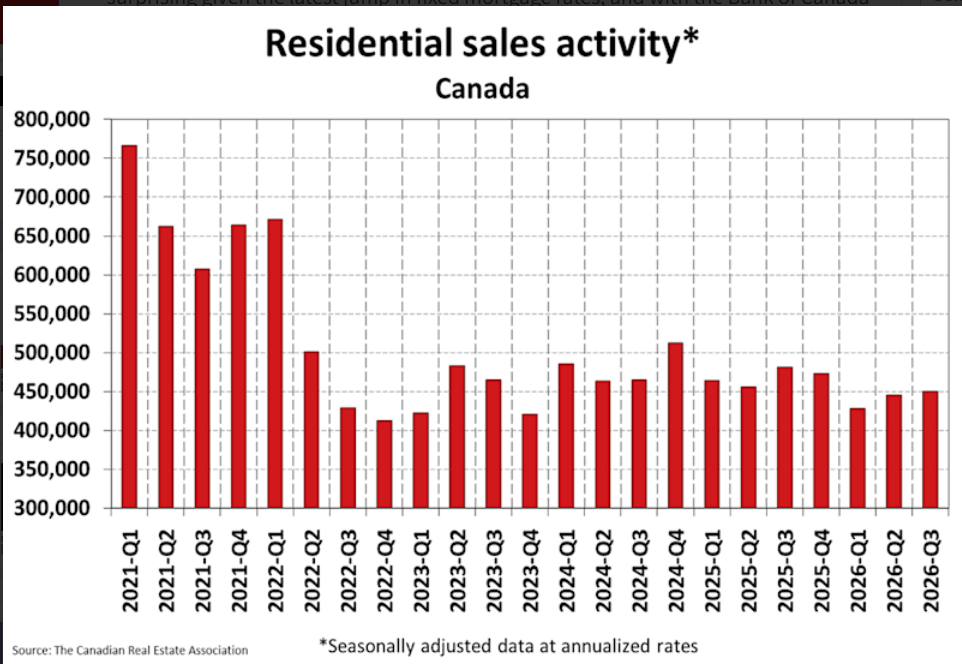
The number of home sales recorded over the Canadian MLS Systems fell by 2.3% m/m in September as inflation fears triggered the biggest bond selloff in years. Rising fixed mortgage rates have spooked potential buyers, even as home prices continue to fall.
“After a four-month run of modestly positive progress on demand, supply, and prices, many of Canada’s housing markets took a step back in September. This was hardly surprising given the latest jump in fixed mortgage rates, and with the Bank of Canada now widely expected to follow with a rate hike before the end of the year,” said Shaun Cathcart, CREA’s Senior Economist. “With housing affordability already stretched, the big question going forward is how much farther will the Bank have to go to keep a lid on inflation next year? Until that becomes clearer, this fresh round of uncertainty will likely send some buyers back to the sidelines.”
New Listings
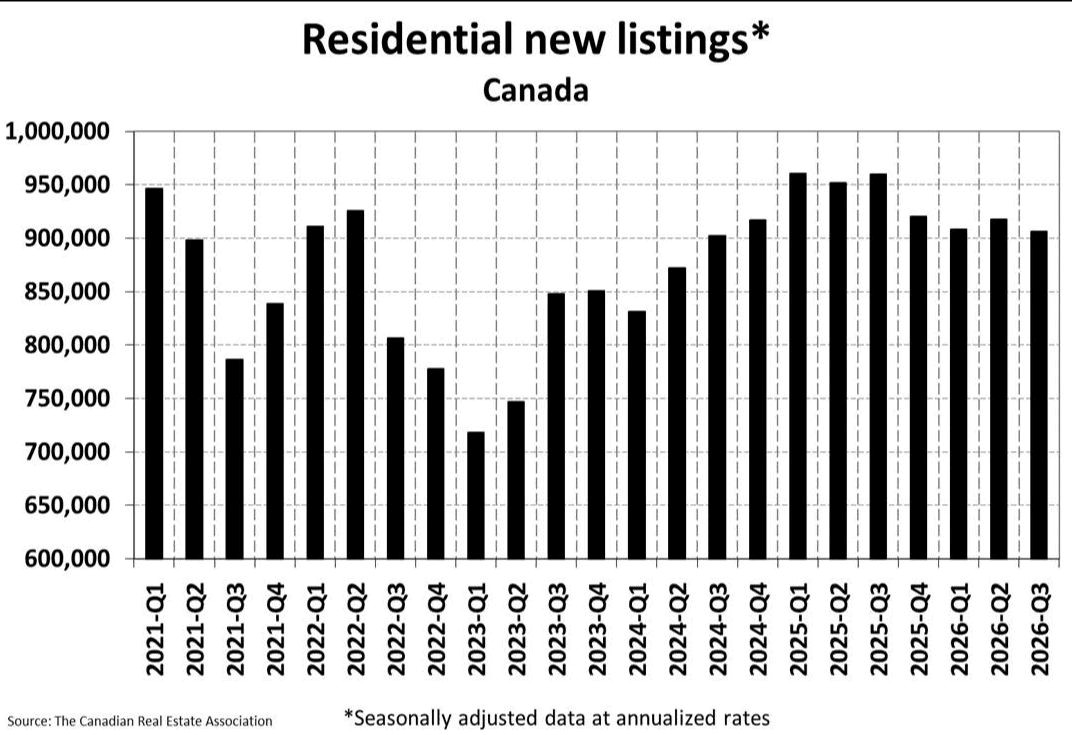
New listings resumed their downward trend in September following a rebound in August, falling 1.8% on a month-over-month basis in September 2026. Overall, new supply has generally been declining since early 2025.
“In a repeat of what we saw earlier this year when the start of the spring market coincided with a jump in mortgage rates, the start of the fall market has likewise been met with an even larger jump in fixed rates,” said Garry Bhaura, CREA Chair. “While that makes the task harder for prospective home buyers as it relates to a mortgage, it will also likely mean more homes to choose from and more negotiating power. For sellers, a well-thought-out pricing strategy will become even more important.”
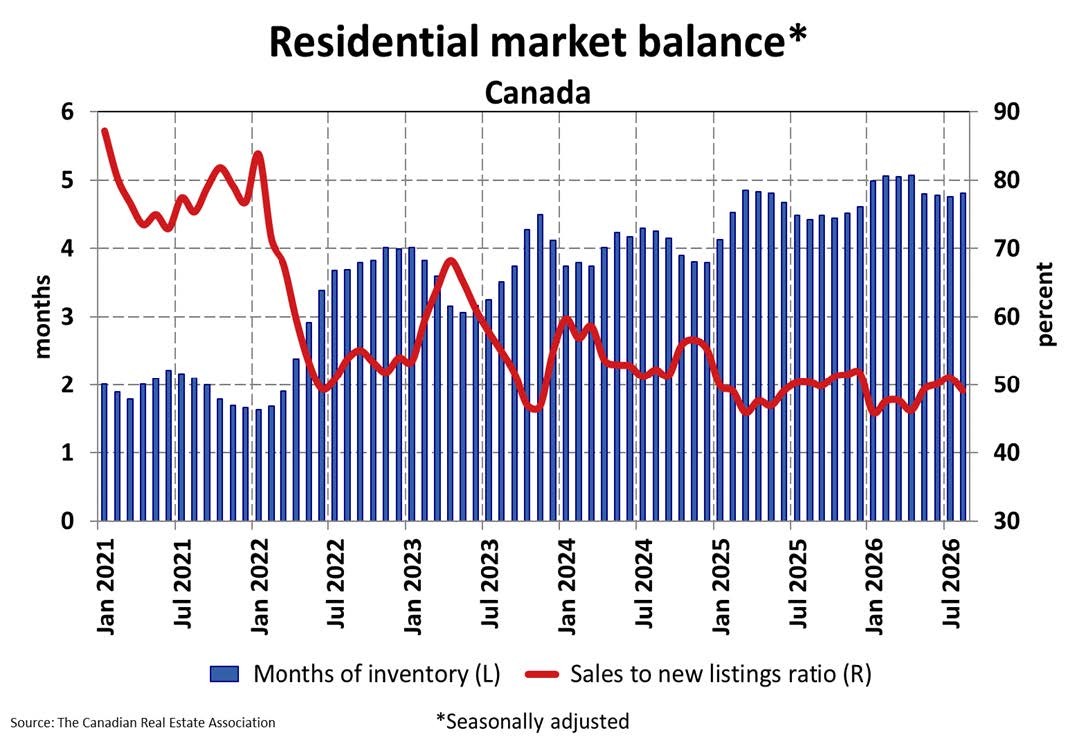
With the decline in sales only just outpacing the drop in new supply in September, the national sales-to-new listings ratio eased slightly to 48.8% compared to 49.1% in August. The long-term average for the national sales-to-new listings ratio is 54.7%, with readings roughly between 45% and 65% generally consistent with balanced housing market conditions.
Slightly more than 200,000 properties were listed for sale on all Canadian MLS® Systems at the end of September 2026, up 1.8% from the same time last year and a little above the long-term average. Overall supply has held steady at historical average levels since spring 2025.
National inventory was 4.9 months at the end of September 2026, up slightly from this summer but in line with the long-term average. One standard deviation above or below that long-term average, a seller’s market would be below 3.6 months, and a buyer’s market would be above 6.4 months.
Home Prices
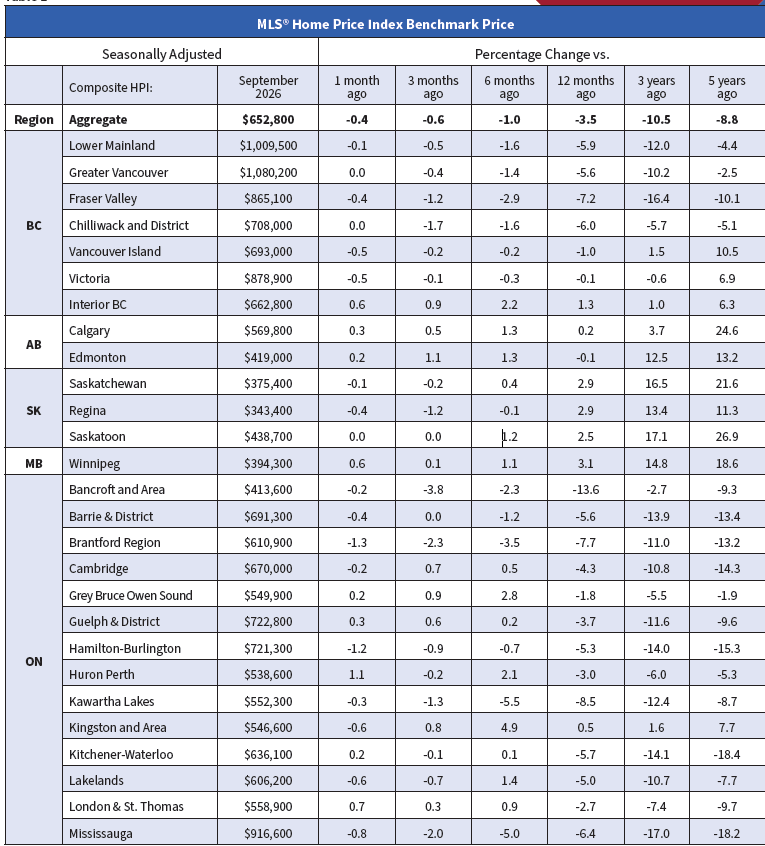
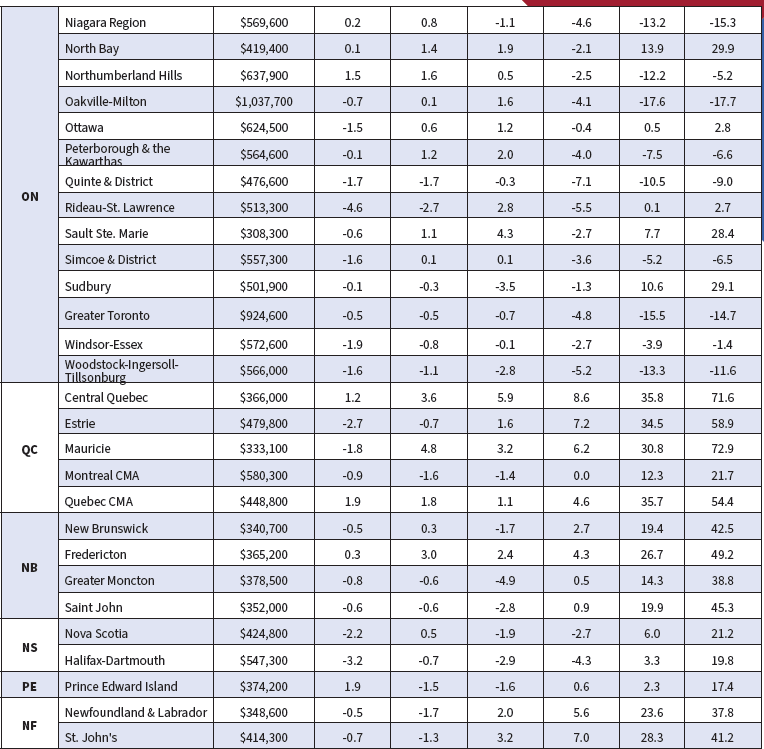
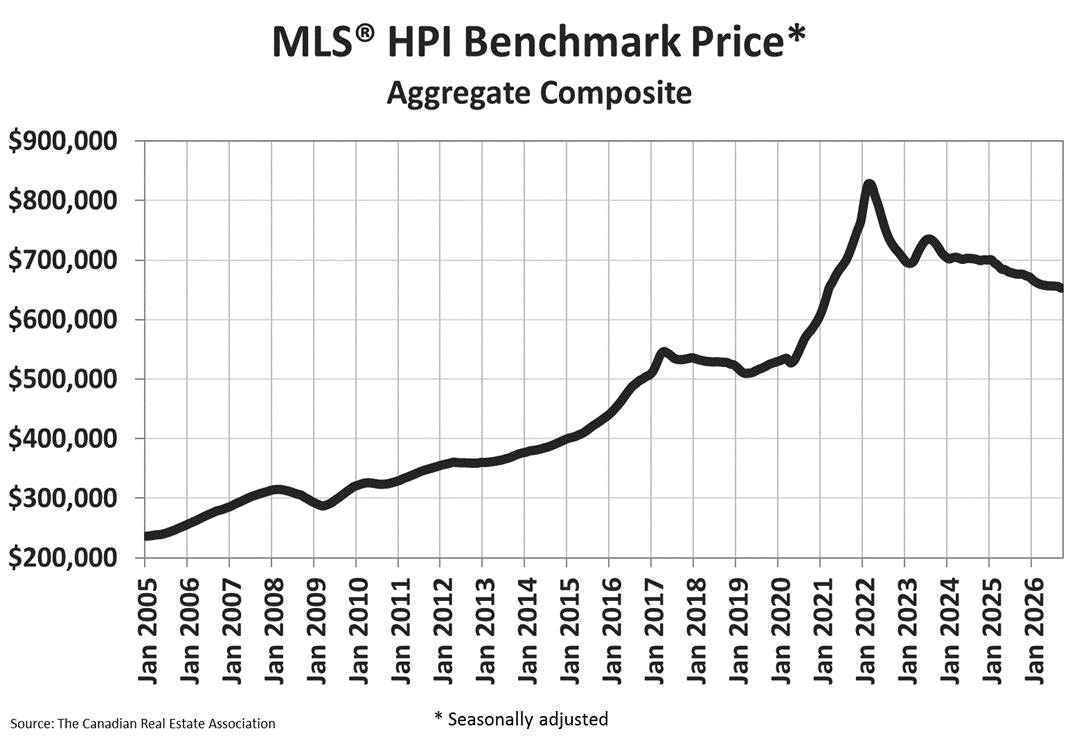
The National Composite MLS® Home Price Index (HPI) edged down 0.4% from August to September. The monthly decline following four months of stable prices reflected a fresh step down for prices in Ontario where demand softened in September, alongside the ongoing moderation of offsetting price gains on the Prairies, in Quebec, and on the East Coast.
The non-seasonally adjusted National Composite MLS® HPI was down 3.4% compared to September 2025, marking the first time that the year-over-year decline had grown larger since January.
Bottom Line
While we do not expect a Canadian rate hike at the October 28 meeting of the Bank of Canada, the odds currently favour a 25-basis-point increase in the overnight policy rate at the last meeting of this year on December 9. To be sure, the Canadian inflation-growth picture favours a continued pause in BoC action; worldwide pressure for a more aggressive inflation response will likely drive Canadian policy as well.
The war with Iran is unlikely to end soon, keeping upward pressure on oil prices, which is spilling over into the cost of a wider array of goods and services. The GTA and the GVA continue to suffer relatively weak demand in the condo sector. CREA has reduced its forecast for home sales in 2026-2027.
Key to the October 28th action will be the CPI data released on Monday, along with the business and consumer outlook surveys. The latest inflation data will be crucial to the bank’s decision, with the headline yearly change in the consumer price index holding near 3% for months, a level Governor Tiff Macklem has called “too high”. Markets put the odds of a hike at the end of the month at about 30% as of Friday morning, with most economists not seeing the central bank tightening borrowing costs just yet, though hikes are likely to start sometime in 2027.